
Energy Solutions for Texas Businesses & Residents

The Texas electricity market is unlike any other in the United States, and the people who get burned by it are almost always the ones who skipped the basics. Most owners we sit down with can quote their last invoice total to the cent, but when we ask who actually generated their electricity last month, who delivered it, and who set the wholesale clearing price, the room goes quiet. That gap between what's on the bill and what's happening behind it is where suppliers make their margin, and it's the gap this section is built to close.


Texas deregulated its retail electricity market in 2002 under Senate Bill 7. Before that, a single utility — Reliant for Houston, TXU for Dallas-Fort Worth, AEP for South Texas — generated the power, owned the wires, billed the customer, and answered the phone when the lights went out. Deregulation broke that single company into three pieces, and once you understand those three pieces, the rest of the market starts making sense. We cover this end-to-end in our deregulation primer, but here is the short version every Texas energy buyer should have memorized.


The three companies behind your meter

The first piece is the Retail Electric Provider, or REP. This is the company whose name appears on your bill — TXU Energy, Reliant, Constellation, Engie, NRG, Direct Energy, Cirro, Champion, Gexa, Hudson, Calpine, Tara, and roughly 100 others. The REP is essentially a reseller. It buys electricity in bulk on the ERCOT wholesale market or through bilateral contracts, marks it up, and sells it to you at a retail rate. The REP does not own a single power plant or a single utility pole. What it owns is the customer relationship and the contract.

The second piece is the Transmission and Distribution Utility, or TDU (sometimes called the TDSP — Transmission and Distribution Service Provider). This is the regulated utility that owns the wires running into your building. In the Houston area that's CenterPoint Energy. In Dallas-Fort Worth it's Oncor. In South Texas (Corpus Christi, Laredo, the Valley) it's AEP Texas Central. In West Texas it's AEP Texas North. In the Rio Grande Valley around McAllen, it's Texas-New Mexico Power. The TDU reads your meter, maintains the lines, and restores power when an outage happens. You do not pick your TDU — geography picks it for you. The delivery charges on your bill go to the TDU regardless of which REP you choose, and those charges are set by the Public Utility Commission of Texas, not by the market. We break down every line item in how to read your commercial electricity bill, and we explain the REP-vs-TDU split in detail in REP vs Utility.


The third piece is ERCOT — the Electric Reliability Council of Texas. ERCOT is the grid operator. It does not generate, transmit, or sell power. What it does is balance supply and demand on the Texas grid in real time, second by second, and clear a wholesale market that runs every five minutes. ERCOT covers about 90% of the state's load — everything except El Paso (which is on the WECC interconnection) and a handful of counties in East Texas and the Panhandle that are on Eastern Interconnection utilities like Entergy and SWEPCO. If you're in ERCOT, your wholesale price is set by ERCOT's locational marginal pricing system, capped at $5,000 per megawatt-hour after the post-Uri reforms (lowered from $9,000 by HB 16 in the 2023 session).


Why This Structure Matters When You Sign a Contract

Here's the part most buyers miss: the energy supply portion of your bill — the part the REP controls — is usually only 50 to 70% of the all-in cost per kWh. The rest is delivery (TDU charges), transmission cost recovery factors, ERCOT administrative fees, gross receipts taxes, and various rider charges. When a REP quotes you "4.9 cents per kWh" on a fixed-rate contract, that 4.9 cents is the energy charge only. Add the TDU pass-through, and your real all-in cost for a Houston commercial account is closer to 9 to 11 cents per kWh depending on rate class and load profile.


This is why you cannot compare REP A's "fixed rate" against REP B's "all-in rate" without doing the math yourself. The contracts are not apples to apples until you normalize for what's bundled and what's passed through. A REP that quotes 5.2 cents bundled (TDU included) is often cheaper than a REP that quotes 4.6 cents unbundled (TDU passed through), even though the headline number looks worse. Always ask whether the rate is bundled or pass-through, and always model it against your actual TDU rate sheet.


The other thing the structure forces on you: when something goes wrong, you have to know who to call. Power's out? That's the TDU — calling your REP gets you a transfer at best. Bill is wrong? That's the REP. Question about ERCOT pricing or generator outages affecting market prices? That's neither — that's a market question, and the answer lives in ERCOT's daily operating reports. Most operators we talk to spend the first six months of a contract calling the wrong company.


One of the biggest blind spots for new commercial buyers is the demand charge. If you're on a residential or small commercial tariff (typically under 10 kW peak demand), you don't pay one — you pay only for the energy (kWh) you consume. But once you cross into mid-size or large commercial rate classes, the bill flips. Your kWh charge stays roughly proportional, but a separate kW charge appears, and that kW charge is based on your single highest 15-minute demand peak in the billing cycle.


That's worth re-reading. You can run flat for 29 days of the month and spike for 15 minutes on the 30th — say, a chiller, a freezer compressor cycling on with the AC, a welding shift starting up, a kitchen pre-heat — and that single 15-minute window sets your demand charge for the whole month. For a Houston commercial account in CenterPoint territory, the TDU demand charge alone runs roughly $9 to $14 per kW depending on rate class, and the REP often layers a generation demand charge on top. A 200 kW peak that could have been 150 kW with operational changes is the difference between a $1,800-per-month demand line item and a $2,500-per-month one. Multiply that by 12 months and demand management starts to look like the cheapest energy investment a building can make.


We cover the mechanics, the calculation methods (15-minute interval, 30-minute, ratchet rules), and operational tactics for cutting peaks in what is a demand charge. If you're running anything bigger than a small office, this is the article we tell people to read first.


How to Actually Read What Shows up in the Mail

Texas commercial bills are not designed to be read. They're designed to be paid. Every REP uses a different layout, different naming conventions, and different rounding rules, and the line items move around depending on contract structure. But under the noise, every commercial bill in ERCOT has the same six categories of charges:


  • Energy charges — the kWh you consumed times the rate from your contract. This is the part the REP controls.
  • Demand charges — your peak kW times the demand rate. Sometimes split into TDU demand and REP demand.
  • TDU delivery charges — pass-through from CenterPoint, Oncor, AEP, or whoever owns the wires. Set by the PUCT, not negotiable.
  • Transmission cost recovery factors (TCRF) — pass-through, adjusted twice a year by the TDU.
  • ERCOT and Reliability Unit Commitment fees — small, but they show up.
  • Taxes and gross receipts — sales tax (waived for most manufacturing and certain agricultural use under Texas Tax Code §151.317), gross receipts tax, plus the PUC assessment.


If your bill doesn't break these out cleanly, you're either on a bundled rate that's hiding the breakdown or your REP is using a custom format. Either way, you're entitled to a line-item breakdown — request the "supplier statement" or "interval data" if your account portal doesn't show it. We walk through a real Texas commercial bill, line by line, in how to read your commercial electricity bill, including how to spot REP markups disguised as pass-throughs.


Downtown skyline at sunset with glass skyscrapers reflecting golden light under a blue sky
September 4, 2026
This section is for operators who already understand the basics and want to go deeper than retail tariff conversations. ERCOT market mechanics, load factor and the 4CP method, the capacity-versus-energy split that drives most of a large account's bill, power purchase agreements, and the hedging instruments that pricing desks use every day — these are the topics that separate the procurement leads who consistently outperform from the ones who just survive the renewal cycle. If you're running a 1 MW+ account, sitting on the energy committee for a multi-site portfolio, or working as the in-house energy manager for a Texas industrial or commercial operation, this section is your reading list. The articles are denser than the rest of the site by design. The buyers we work with at this scale don't want simplifications — they want the same data the supplier's pricing desk is using, so they can negotiate from parity. ERCOT Mechanics: How the Wholesale Price You Actually Pay Gets Set Every Texas commercial electricity contract — fixed, index, hybrid, or block-and-index—is ultimately priced off the ERCOT wholesale market. Even a fixed-rate quote is just the REP's expectation of forward ERCOT settlement plus their margin and risk premium. Understanding how ERCOT actually clears is the foundation for understanding whether a quote is rich, fair, or aggressive. ERCOT operates two interlocking markets. The day-ahead market (DAM) clears at noon each day for the following 24 hours of delivery, accepting bids from generators and demand-response resources. The real-time market (RTM) clears every five minutes during operating day, settling deviations from day-ahead positions. Both markets use security-constrained economic dispatch and produce locational marginal prices (LMPs) at over 16,000 nodes across the Texas grid. Most retail contracts settle off the load zone hub price — North, South, West, or Houston — which is a load-weighted average of nodal prices in that zone. Five forces drive the price you ultimately pay: total system load (which tracks weather almost perfectly in summer), thermal generator availability, intermittent renewable output (Texas has more wind than any other state and more utility-scale solar than any other state except California), natural gas prices (which set the marginal generator's fuel cost most hours), and transmission constraints between zones. When all five are favorable, ERCOT prices clear at $20 to $30 per MWh — meaningfully below what most fixed contracts charge. When constraints stack, prices spike to the $5,000/MWh cap. The post-Uri reforms under HB 16 lowered that cap from $9,000, added the High System-Wide Offer Cap reset rule, and tightened scarcity pricing logic, but the structural volatility remains. We cover the full mechanics, the role of the Operating Reserve Demand Curve (ORDC) in price formation, and the five drivers in detail in our ERCOT wholesale electricity pricing guide . ERCOT Mechanics: How the Wholesale Price You Actually Pay Gets Set Every Texas commercial electricity contract — fixed, index, hybrid, or block-and-index—is ultimately priced off the ERCOT wholesale market. Even a fixed-rate quote is just the REP's expectation of forward ERCOT settlement plus their margin and risk premium. Understanding how ERCOT actually clears is the foundation for understanding whether a quote is rich, fair, or aggressive. ERCOT operates two interlocking markets. The day-ahead market (DAM) clears at noon each day for the following 24 hours of delivery, accepting bids from generators and demand-response resources. The real-time market (RTM) clears every five minutes during operating day, settling deviations from day-ahead positions. Both markets use security-constrained economic dispatch and produce locational marginal prices (LMPs) at over 16,000 nodes across the Texas grid. Most retail contracts settle off the load zone hub price — North, South, West, or Houston — which is a load-weighted average of nodal prices in that zone. Five forces drive the price you ultimately pay: total system load (which tracks weather almost perfectly in summer), thermal generator availability, intermittent renewable output (Texas has more wind than any other state and more utility-scale solar than any other state except California), natural gas prices (which set the marginal generator's fuel cost most hours), and transmission constraints between zones. When all five are favorable, ERCOT prices clear at $20 to $30 per MWh — meaningfully below what most fixed contracts charge. When constraints stack, prices spike to the $5,000/MWh cap. The post-Uri reforms under HB 16 lowered that cap from $9,000, added the High System-Wide Offer Cap reset rule, and tightened scarcity pricing logic, but the structural volatility remains. We cover the full mechanics, the role of the Operating Reserve Demand Curve (ORDC) in price formation, and the five drivers in detail in our ERCOT wholesale electricity pricing guide . Load Factor: The Metric that Determines Which Contract Structures Fit Load factor is the ratio of average load to peak load over a billing or annual period. A facility that draws 500 kW continuously has a load factor of 100%; one that peaks at 500 kW for an hour and averages 100 kW the rest of the day has a load factor of 20%. The number sounds academic, but it determines two of the most important things about your account: which contract structure is mathematically right for you, and how aggressive a rate any REP will quote you. Texas REPs price load factor explicitly. A 70%-load-factor account in CenterPoint with 1 MW of peak demand will get a meaningfully cheaper energy rate than a 25%-load-factor account at the same MW level, because the high-load-factor customer's energy use is more predictable, easier to hedge in forward markets, and less exposed to peak-period scarcity pricing. We have seen 1.5 to 2.5 cents per kWh of difference between identical-size accounts purely because of load shape. Load factor also drives capacity-charge exposure. The annual transmission cost recovery factor (TCRF) for large industrial customers is calculated using the 4CP method — the four highest 15-minute system load peaks in the four summer months (June through September). Your facility's average demand during those four specific intervals determines its share of the annual transmission cost allocation. For a large industrial account, the 4CP charge can be hundreds of thousands of dollars per year, and it's almost entirely controllable: facilities that can curtail load during the four predicted peak intervals can cut their 4CP allocation by 30 to 50%. The 4CP intervals are predictable within a few-hour window using ERCOT's load forecasts, and several Texas industrial operations run formal 4CP programs that pay for themselves many times over each summer. We cover load-factor benchmarking, calculation methods, and the negotiating leverage it gives you in load factor: the hidden metric that controls your electricity costs . Capacity vs. Energy: The Cost Stack Most Operators Don't See The energy charge on a commercial bill — the kWh portion the REP markets — is usually only 50 to 70% of the all-in cost. The rest is the cost stack of capacity, demand, ancillary services, transmission, and distribution. Each of these has its own pricing logic, its own regulatory cadence, and its own optimization opportunity, and none of them are "energy" in the kWh sense. Capacity charges in ERCOT show up indirectly compared to capacity-market regions like PJM. Texas does not have a forward capacity auction; instead, capacity costs are recovered through scarcity pricing in the real-time market and through the ORDC adder, both of which flow through to retail contracts as part of the energy charge or as a separate "capacity reservation" line item depending on the REP. For large accounts on tariff contracts, capacity-related charges can run 1 to 2 cents per kWh by themselves. Ancillary services — regulation, responsive reserve, non-spinning reserve, and the newer ECRS product — recover roughly $200 million to $600 million annually across ERCOT depending on the year. They're allocated to load on a kWh basis and typically show up as a 0.1 to 0.3 cent per kWh adder. Most operators ignore them as a rounding error; for a 10 MWh per hour industrial account, that "rounding error" is $25,000 to $75,000 a year. The full breakdown — how energy, demand, capacity, ancillary, and 4CP each contribute to the total cost stack, where each one is negotiable and where it isn't, and the optimization opportunities by category — is in capacity vs energy charges . For any account spending over $500,000 annually on electricity, the cost-stack analysis usually surfaces 5 to 10% of savings opportunities that pure rate negotiation never touches. Capacity vs. Energy: The Cost Stack Most Operators Don't See The energy charge on a commercial bill — the kWh portion the REP markets — is usually only 50 to 70% of the all-in cost. The rest is the cost stack of capacity, demand, ancillary services, transmission, and distribution. Each of these has its own pricing logic, its own regulatory cadence, and its own optimization opportunity, and none of them are "energy" in the kWh sense. Capacity charges in ERCOT show up indirectly compared to capacity-market regions like PJM. Texas does not have a forward capacity auction; instead, capacity costs are recovered through scarcity pricing in the real-time market and through the ORDC adder, both of which flow through to retail contracts as part of the energy charge or as a separate "capacity reservation" line item depending on the REP. For large accounts on tariff contracts, capacity-related charges can run 1 to 2 cents per kWh by themselves. Ancillary services — regulation, responsive reserve, non-spinning reserve, and the newer ECRS product — recover roughly $200 million to $600 million annually across ERCOT depending on the year. They're allocated to load on a kWh basis and typically show up as a 0.1 to 0.3 cent per kWh adder. Most operators ignore them as a rounding error; for a 10 MWh per hour industrial account, that "rounding error" is $25,000 to $75,000 a year. The full breakdown — how energy, demand, capacity, ancillary, and 4CP each contribute to the total cost stack, where each one is negotiable and where it isn't, and the optimization opportunities by category — is in capacity vs energy charges . For any account spending over $500,000 annually on electricity, the cost-stack analysis usually surfaces 5 to 10% of savings opportunities that pure rate negotiation never touches. Power Purchase Agreements: Long-Dated Price Certainty for Buyers Who Can Hold Them Power purchase agreements (PPAs) — both physical and virtual — have moved from the periphery of corporate energy strategy to the mainstream over the last decade. Texas leads the nation in corporate PPA volume, driven primarily by the abundance of low-cost wind and solar generation in West and South Texas combined with the state's deregulated retail market. . A physical PPA is a bilateral contract under which the buyer takes title to electricity generated by a specific renewable project at a contracted price, typically for 10 to 20 years, with the energy delivered to the buyer's load through the ERCOT grid. A virtual PPA (VPPA) is a financial instrument — the project sells its output to ERCOT at the prevailing wholesale price, the buyer pays the project the contracted strike price, and the difference settles as cash (the buyer either receives a payment when wholesale prices rise above strike or pays the project when they fall below). VPPAs do not affect what shows up on your retail bill; they're a separate financial hedge that produces renewable energy certificates (RECs) for the buyer's sustainability claims. The economics work for buyers with three characteristics: enough load to make the structuring effort worthwhile (typically 5 to 10 MW or more of average demand), a long enough operational horizon to absorb a 10-to-20-year contract, and a balance sheet that can handle the mark-to-market accounting under ASC 815 if the deal qualifies as a derivative. For buyers who fit, a Texas PPA today typically clears at a discount to the equivalent retail strip — meaningful savings, plus the carbon claim. For buyers who don't fit (most accounts under 1 MW peak demand, anyone with operational uncertainty over a 10-year horizon), the PPA is the wrong tool and a layered retail hedge is better. We cover physical vs virtual mechanics, settlement details, accounting treatment, and deal-term diligence in power purchase agreements in Texas: a complete guide for commercial buyers . Hedging: The Four Strategies Pricing Desks Use to Manage Volatility Once an account is large enough to think about ERCOT exposure as a portfolio rather than a single contract, the conversation shifts from "fixed or index" to "what's our hedge ratio, and which instruments are we using to get there." There are four hedging strategies that cover essentially every real-world Texas commercial procurement program: The first is the fixed-price retail contract , which is implicitly a hedge — the REP takes ERCOT exposure off your books and charges you a premium for it. Simple, expensive, but appropriate for the majority of Texas commercial accounts. The second is block-and-index , where you buy specific MW blocks at fixed forward prices for specific delivery periods (commonly summer peak hours where ERCOT prices are most volatile) and let everything else settle at the index. This gives you hedge coverage on the high-cost portion of your load while letting you participate in market downside on the lower-risk hours. The third is layered procurement , where you build the hedge in tranches over time rather than locking the entire position at once. Sign 30% of your forward exposure 18 months out, another 30% at 12 months, the next 25% at 6 months, and let the remaining 15% settle at index. The result is a dollar-cost-averaged hedge that smooths out timing risk — you don't have to be right about market direction; you have to be present every quarter. The fourth is financial hedging via swaps, options, or VPPAs , which sits adjacent to the retail contract and adjusts the buyer's net exposure independently of the physical supply arrangement. Common for very large industrial accounts, treasury-managed corporate energy programs, and buyers with sustainability mandates that justify VPPA structures. The right combination depends on load size, operational risk tolerance, balance-sheet capacity, and view on the ERCOT forward curve. For most accounts under 5 MW, layered fixed-price retail covers 90% of the optimization. Above that scale, block-and-index or financial hedging starts producing materially better outcomes. We cover the four strategies, when each one fits, and the practical mechanics of getting them executed in how to hedge electricity price volatility in Texas . 
Sunset behind power lines and transmission towers over a dark field
September 4, 2026
The fastest way to cut a Texas commercial electricity bill is not switching REPs, signing a longer term, or installing solar. It's understanding which line items on your bill are actually moving the total — and most of the time, the answer surprises operators who assumed the kWh rate was the lever. This section is built around a simple premise: every dollar you save on operations is worth roughly two dollars saved on procurement, because operational savings compound across every contract you sign for the rest of the building's life. We've audited bills for thousands of Texas commercial accounts over the years — restaurants, manufacturers, multi-tenant buildings, healthcare campuses, warehouses, retail. The pattern repeats. The biggest savings almost never come from finding a cheaper REP. They come from cutting demand peaks, fixing rate-class assignments, capturing the sales-tax exemption, and auditing for billing errors that nobody else caught. None of that requires capital. All of it requires knowing where to look, and that's what this section is for. Demand Management: The Single Biggest Lever, and the One Most Operators Ignore For any Texas commercial account that pays a demand charge — meaning anything bigger than a small office or a residential-class tariff — the demand line item is usually 30 to 70% of the all-in bill. That number isn't an exaggeration. We have seen restaurants in CenterPoint territory where the kWh charge was $1,400 a month and the demand charge was $1,800. We've seen industrial accounts where demand exceeded energy by a factor of two. And in nearly every case, the customer was negotiating their next contract on the kWh rate while ignoring the demand component, which would have moved twice the dollars. The mechanics are worth understanding precisely. Your demand charge is calculated on your single highest 15-minute average kW usage during the billing cycle — not your peak instant, not your average, not your daily max. ERCOT meters report in 15-minute intervals; the highest of those intervals in the month is your billable demand. For a Houston commercial account, the all-in demand rate (TDU plus any REP-side generation demand) typically runs $9 to $14 per kW. So a chiller that runs at 80 kW most of the time but cycles to 220 kW for a 15-minute startup window once a month is costing you $2,800+ per year in demand charges that didn't have to exist. The interventions are mostly operational, not capital. Stagger startup sequences so big loads don't coincide. Pre-cool buildings before peak hours so AC compressors run at lower setpoints during 2-7 PM summer afternoons. Use timers and BMS logic to prevent HVAC, refrigeration, and process loads from kicking on simultaneously. For larger facilities, a basic load-shedding program — automated curtailment of non-critical loads when measured kW approaches a threshold — pays back in months, not years. We cover the full mechanics, the calculation methods (15-minute interval, demand ratchets, 4CP charges for very large accounts), and the operational tactics that actually move peaks in what is a demand charge . Rate-Class Auditing: The Savings Hiding in Plain Sight Every commercial account in Texas is assigned to a rate class by the TDU based on transformer size, peak demand, and historical load profile. The rate class determines which TDU tariff applies — and Texas TDU tariffs vary substantially in their kWh-vs-demand-charge mix. A rate class with low energy charges and high demand charges is great for high-load-factor industrial accounts and brutal for spiky retail; a rate class with high energy and low demand is the opposite. The TDU's initial assignment is usually correct on day one, but operations change — a tenant moves out, a production line shuts down, a building gets a major HVAC retrofit — and the rate class often doesn't get updated. We have moved Texas commercial accounts down a rate class and saved 8 to 12% on the all-in bill with no operational change other than the paperwork. The audit costs nothing — most TDUs will run the rate-class analysis on request, and a competent broker or energy consultant can pull historical interval data and run the comparison. If you've been on the same rate class for more than five years and your building's operations have changed, you should be auditing. The Bill Audit: Errors Are More Common Than People Expect Texas commercial bills are long, the line items are inconsistent across REPs, and the pass-through calculations involve at least four different rate schedules updated on different cadences. Errors happen. We see them on roughly 8 to 12% of the bills we audit — billing the wrong rate class, applying the prior contract's rate after a renewal took effect, missing the sales tax exemption, double-counting a TCRF adjustment, computing demand on a non-billable interval. The errors usually average a few hundred dollars per occurrence, but on multi-site accounts they aggregate to real money. Most REPs and TDUs will refund billing errors going back 12 to 24 months once they're identified — Texas Public Utility Commission rules require it. The hard part is finding them, which means knowing what each line item should look like and being able to reconcile your contract terms against the actual charges month over month. The full breakdown of how to read every line item, what to compare against, and the most common errors we catch is in how to read your commercial electricity bill in Texas . The Texas Sales-Tax Exemption: Free Money Most Operators Don’t Claim Under Texas Tax Code §151.317 and §151.318, electricity used directly in manufacturing, processing, or fabricating is exempt from state sales tax (currently 6.25% in most jurisdictions, with local additions taking it to 8.25%). The exemption also applies to electricity for certain agricultural uses and to common-area electricity in residential apartment complexes. For a manufacturing facility with a $250,000 annual electric spend, the exemption is worth $20,000+ per year — and most accounts that qualify have never filed for it because nobody told them to. The filing requires a "predominant use study" — a calculation showing that more than 50% of the electricity at the meter is used for an exempt purpose. For dedicated production facilities the math is straightforward; for mixed-use buildings (office space combined with shop floor, for example) it requires sub-metering or a defensible load allocation. Either way, the savings are immediate, ongoing, and retroactively recoverable for up to four years under Texas tax law. If your facility has any production or process load and you're paying full sales tax on the bill, this is almost certainly money on the table. Industry-Specific Tactics That Move the Needle Energy savings tactics are not generic — they map to load profiles. The interventions that work for a restaurant are different from the interventions that work for a warehouse, which are different from the interventions that work for a multi-tenant office. A few of the patterns we see consistently: Restaurants and food service. Demand charges drive everything. Refrigeration compressors, HVAC, kitchen exhaust, and pre-cook ovens stack their startup peaks if they all turn on at the same time in the morning. Staggering startup sequences by 15 to 30 minutes — easy with basic time-clock controls — typically cuts peak demand by 15 to 25%, with no impact on operations. We cover this in detail in how restaurants in Texas can cut electricity costs , including the bill structures specific to restaurant rate classes and the equipment-side levers that pay back fastest. Industrial and manufacturing. Load factor is the dominant metric. Most industrial accounts have load factors above 60%, which means they're well-shaped for index or hybrid contract structures rather than fixed. The rate-structure decision often saves more money than the operational interventions. Beyond that, capacity charges and 4CP exposure (the four highest summer peak hours that determine annual transmission cost allocations) are the place to focus. A facility that can shed 20% of its load during the four predicted 4CP hours each summer can cut its capacity charges by tens of thousands annually. Multi-tenant retail and office. Common-area metering, master-meter vs sub-meter decisions, and tenant cost allocation drive most of the savings opportunity. Buildings on master meters where tenants are billed back on square footage typically waste 20 to 30% of the energy spend because nobody internalizes the cost; sub-metering reverses that. Warehouses and storage. Lighting and HVAC dominate. LED retrofits with daylight harvesting controls have 18-to-30-month paybacks in Texas climates, even before utility rebate incentives. For climate-controlled storage, demand-shedding during summer peaks is the single biggest operational lever. The article how to lower commercial electricity bills in Texas walks through each of these by industry with real numbers and the specific tactics that pay back fastest. 
Hand signing a document at a white desk, with a black suit jacket visible
September 4, 2026
Most Texas businesses do not lose money on their electricity contract because they negotiate a bad rate. They lose money because they negotiate a good rate at the wrong time, on the wrong term length, with the wrong structure attached, and with three or four contract clauses they didn't read. Rate matters — but rate is maybe 60% of the outcome. The other 40% lives in timing, term, and the fine print, and that's what this section is built to fix. We have run procurement for businesses on every side of this market — startups signing their first commercial contract, multi-site operators rolling 30 accounts at once, industrial accounts with seven-figure annual spend negotiating directly with REP pricing desks. The patterns repeat. The buyers who consistently land 8 to 15% under market are not better negotiators. They run the same playbook every renewal, and they refuse to let timing drift. The buyers who consistently overpay are reactive — they get a renewal letter, they panic-shop in the last two weeks, and they sign whatever lands on the desk before the contract expires. This section is the playbook the first group uses. Renewal Timing: The 3-To-4-Month Rule, and Why Most Operators Violate It The single highest-leverage decision in any commercial electricity procurement is when you start shopping. Start too early — six or eight months out — and most REPs will not quote you, because they cannot lock a forward delivery price that far ahead with confidence. Start too late — under 30 days — and you are negotiating against a hard deadline, which is the worst possible position to be in. The sweet spot is 90 to 120 days before contract expiration. We call it the 3-to-4-month rule, and it is the difference between a good rate and a great one. Three things happen in that 90-to-120-day window that don't happen earlier or later. First, REPs can give you firm prices on forward delivery — meaning the rate they quote is the rate you'd actually sign at, not a directional indication. Second, you have time to run a real RFP — get five to seven quotes, normalize them for term and structure, push back on the leaders, and re-quote. A real bid process consistently delivers 4 to 8% better pricing than a single-quote shop, and it requires at least two negotiation rounds, which means at least 60 days of runway. Third, you have time to walk away. Negotiating leverage is fundamentally a function of optionality, and the only way to have optionality is to start before you need to sign. Operators who start under 30 days out lose all three. The REPs know there's a deadline, they don't bother with sharp pencils, and the customer signs whatever doesn't blow up the bill. We have seen the same account, with the same load profile, get a 5.4-cent quote when shopped 100 days out and a 6.1-cent quote when shopped 25 days out — same supplier, same contract terms, 13% difference, just from timing. The mechanics, the calendar of when ERCOT forwards typically price seasonally, and how to set up a 90-day process inside your operations are covered in when to renew your commercial electricity contract in Texas . What Happens if You Miss the Window: The Holdover Rate If your contract term ends and you have not signed a new one, you do not lose service. The Texas regulatory framework requires REPs to keep delivering power — but it does not require them to keep delivering it at your old price. What you land on is called a holdover rate , sometimes called a month-to-month, post-term, or default variable rate. The REP sets it, and the REP has every economic incentive to set it high. How high? In our pricing data across CenterPoint, Oncor, and AEP territories, holdover rates typically run 18 to 25 cents per kWh — somewhere between 2x and 3x a fair fixed-rate renewal quote. Some REPs go higher. We have seen holdover rates above 30 cents per kWh on accounts where the customer was not paying attention and the REP knew it. The math is brutal: a Houston commercial account with a 12,000 kWh average month was paying $700 on its 5.8-cent fixed rate, and after the contract rolled to a 22-cent holdover, the same usage produced a $2,640 bill. One missed renewal cycle erased two years of careful procurement. The most common cause of a holdover landing is not negligence — it's miscommunication. The renewal notice goes to a property manager who doesn't own the contract, or to a procurement email that nobody monitors after a personnel change, or it gets caught in a spam filter, or the REP's letter says "your contract expires soon" without specifying the exact date. We cover the mechanics of holdover rates, the legal framework around required notification windows, and the recovery playbook (yes, you can sometimes get the holdover charges reversed if you act fast) in what happens when your commercial electricity contract expires in Texas . Term Length: The Trade-off Nobody Explains Correctly REPs almost always quote longer terms at lower rates. A 12-month fixed for a CenterPoint commercial account today might come in at 6.1 cents per kWh; the same account on a 36-month would land closer to 5.4 cents; on a 48-month, 5.0 cents. The instinct is to lock the longest term — bigger savings, more certainty. That instinct is often wrong, for two reasons. First, longer terms expose you to more pass-through inflation. Remember that the fixed portion of your bill is only the energy charge — TDU rates, TCRF adjustments, and ERCOT fees keep moving regardless of your contract. Over a 48-month term, those pass-throughs typically increase by 10 to 18% in cumulative real terms. Your "locked" rate doesn't actually lock your bill. Second, longer terms reduce your optionality. If the ERCOT forward curve drops 15% next year — which it has done multiple times in the last decade — a 12-month customer can re-shop and capture the savings. A 48-month customer is locked out for three more years. The savings from the longer initial term get wiped out by the missed re-shop. The right term length depends on where forward prices sit relative to historical averages and what your view is on directional movement. When forwards are below three-year trailing averages, lock long — you're buying cheap insurance. When forwards are at or above trailing averages, stay short — keep the option to re-shop. A reasonable default for most accounts when forwards are mid-range is 24 months, which we call the goldilocks term: long enough to amortize the procurement effort and capture the term discount, short enough to keep optionality. Broker vs Direct Procurement: Why Most Accounts End Up Using a Broker Texas has roughly 100 active retail electric providers serving the commercial market, and each one publishes pricing differently, prices forward delivery differently, and bundles or unbundles their TDU pass-throughs differently. Running a real procurement process means getting normalized quotes from at least five of them, comparing not just rate but bandwidth tolerances, swing rules, early-termination penalties, sales-tax handling, demand charge structure, and renewal language. For an in-house procurement team, that's roughly 30 to 50 hours of work per renewal cycle. Brokers exist because that work is mostly fungible — the same RFP process applied to one account can be applied to twenty, and the volume gives the broker pricing access most individual accounts can't get on their own. Most reputable brokers don't charge the customer; they're paid by the winning REP, typically as a small per-MWh adder built into the rate (commonly 0.1 to 0.3 cents per kWh, equivalent to roughly a 2 to 4% commission). The customer's all-in rate is usually still lower than what they'd negotiate solo, because the broker's volume gets sharper pencils than a single account would. The cases where direct procurement wins are narrow: very large accounts (10+ MW peak demand) where the customer has a dedicated energy manager and the REPs are willing to bring senior pricing-desk staff to the table; or accounts with very simple, very stable load profiles where the contract is essentially commodity. For most Texas commercial accounts under 5 MW, going direct means accepting either a worse price or a much bigger time investment, often both. The economics, the conflict-of-interest risks to watch for in broker selection, and the questions every operator should ask before signing with one are covered in why Texas businesses use energy brokers . The Contract Clauses That Quietly Cost You Money Beyond rate and term, the contract terms that consistently bite Texas operators are the ones nobody reads until they trigger. The ones we see cause the most damage: Bandwidth / swing clauses. The fixed rate applies only if monthly usage stays within a defined band of forecast (typically ±20%). Exceed it or fall short, and either excess kWh get repriced at spot or you pay an underconsumption penalty. Always know your band and have a plan for what triggers a renegotiation. Material-change provisions. Open a second location, sell a tenant suite, replace a major piece of equipment, and the REP can claim a material change in the load profile and re-price the contract. Most material-change clauses are written broadly enough that any operational change qualifies. Early-termination liability (ETL). If you break the contract — sell the building, close the location, switch REPs early — the ETL is calculated as the difference between your contract rate and the current market rate, multiplied by the remaining contracted volume. In a falling-price environment that's small. In a rising-price environment it can equal a year of bills. Auto-renewal language. Some contracts auto-renew at the same rate; some auto-renew onto a holdover variable; some require active opt-out 30, 60, or 90 days before expiration. Always know which one you signed. Pass-through definitions. "TDU charges and applicable taxes" sounds like a clean pass-through, but the definition of "applicable" varies by REP. Some pass through everything including their own internal capacity costs as "TDU-related"; some hold those internally. Push for an itemized definition. None of these clauses are negotiable on a small account, and most are not negotiable on a mid-size account either — but you can choose between REPs based on which clauses are friendliest. Two REPs quoting the same headline rate can have radically different real all-in costs once you account for the fine print. What Good Procurement Actually Looks Like The accounts that consistently get fair pricing run a calendar-driven process: 120 days out, pull the prior-year usage data and calculate load factor; 100 days out, issue an RFP to five to seven REPs; 75 days out, normalize the quotes and run a second round with the top three; 60 days out, sign with the winner; 30 days out, confirm enrollment and verify the start date. That's it. There is no magic — it's just running the same boring process every cycle and refusing to compress the timeline. The articles below cover each step in depth. Read in order, they're a complete walk-through of how to never lose money on contract timing or terms again. Once you have this section internalized, the Rate Structures section is where you go to choose the right product to put inside the contract. 
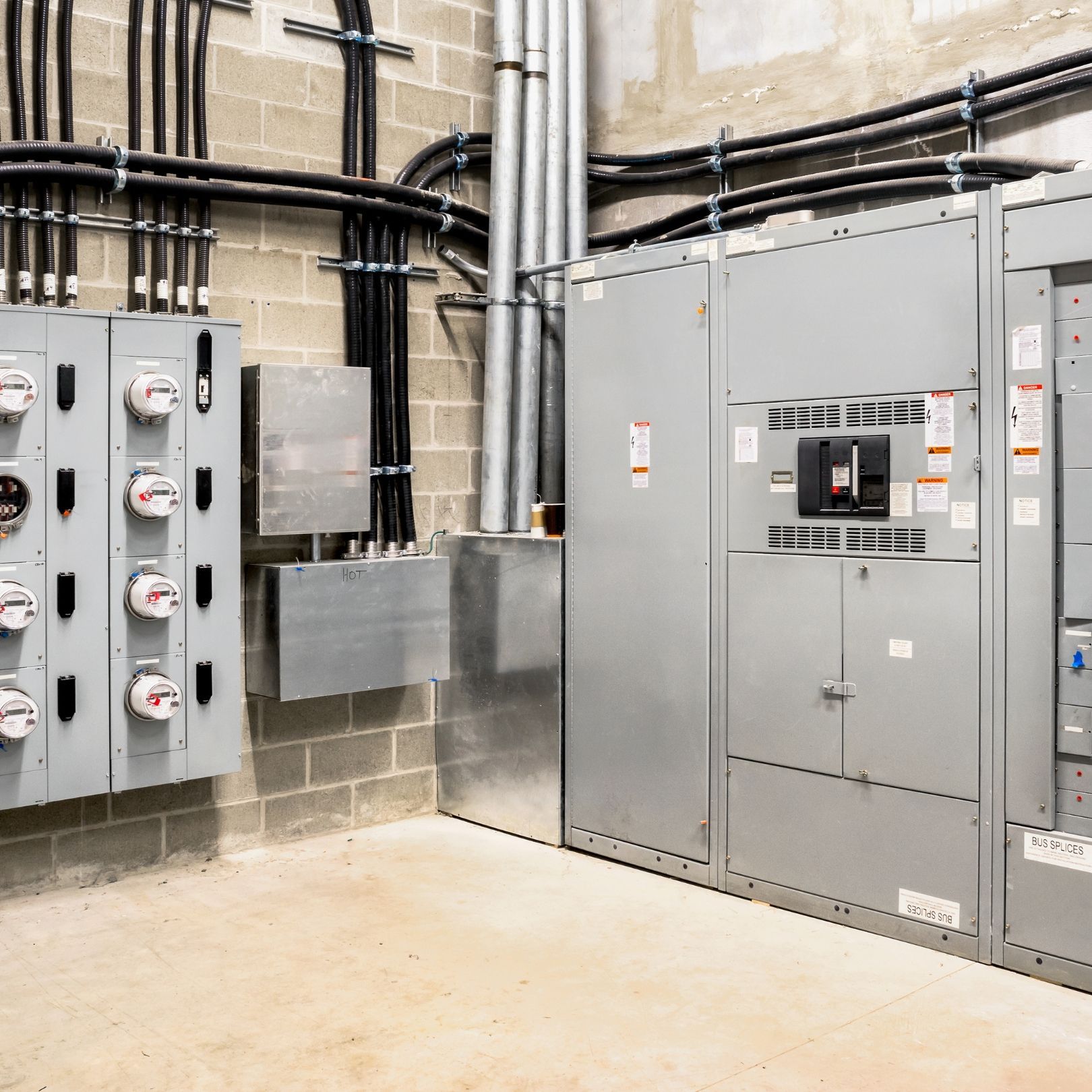
Electrical utility room with gray control panels, conduits, and circuit boxes against cinder block walls.
September 4, 2026
Choosing a commercial electricity rate structure in Texas is the single biggest decision in any procurement cycle, and most operators get it backwards. They start with the rate — "what's your cheapest fixed?" — and work outward from there. The buyers who consistently land 8 to 15% below market start the other direction: with their load profile, their cash-flow tolerance, and their view on where ERCOT prices are heading over the contract term. The rate structure is an output of those three inputs, not a starting point. Get the structure wrong and even a great rate becomes a bad contract. There are five real rate structures in the Texas commercial market — fixed, index, variable, hybrid, and block-and-index — plus a handful of marketing names that REPs invent for the same underlying products. This section breaks down what each one actually is, when each one fits, and the contract terms that quietly turn a good structure into a bad one Fixed Rate: Predictable, but Rarely as Predictable as It Sounds A fixed-rate commercial electricity contract locks in a kWh price for the term of the agreement — typically 12, 24, 36, or 48 months. The headline number ("4.9 cents per kWh, 36-month term") is what most operators chase, and on the surface it looks like the simple, defensible choice: same rate every month, no surprises. For roughly 70% of small and mid-size Texas commercial accounts, fixed is the right answer. But "fixed" almost never means what new buyers think it means. What's actually fixed in a Texas fixed-rate contract is the energy charge — the kWh portion the REP controls. Everything else (TDU delivery, TCRF adjustments, ERCOT fees, gross receipts tax) flows through at whatever the regulator approves, and those pass-throughs change at least twice a year. We have seen "fixed-rate" customers see their all-in cost per kWh move 8 to 12% during a 36-month contract because of TDU rate cases. The energy charge held — the bill didn't. The other thing buyers miss: most Texas fixed-rate contracts contain a bandwidth clause , sometimes called a swing or material-change provision. It guarantees the fixed rate only if your monthly usage stays within a band — typically ±20% of the historical average the REP used to price the contract. Drop below 80% (a slow season, a partial shutdown, a tenant move-out) and you trigger a "minimum demand" or "underconsumption" charge that can wipe out the rate advantage. Go above 120% (an expansion, a new line, a heat wave) and the excess kWh either gets repriced at the spot market or triggers a contract renegotiation. Fixed makes sense when three things are true: your usage is stable, you have low tolerance for monthly bill variance, and the ERCOT forward curve for your delivery zone is at or below historical averages. We cover the full mechanics — what's locked, what isn't, when to sign, and the bandwidth math — in the complete guide to fixed-rate commercial electricity in Texas . Index Rate: Pay the Wholesale Market, Accept the Volatility An index-rate (sometimes called pass-through, market-rate, or wholesale) contract prices your energy charge as the ERCOT real-time or day-ahead settlement price plus a small adder — typically 0.3 to 0.8 cents per kWh — that covers the REP's services, scheduling, capacity, and ancillary cost components. You are essentially buying electricity at wholesale and paying the REP a wrapper fee. The math is appealing. ERCOT's average wholesale price has run in the 2.5 to 4.5 cent range over most of the last decade in normal market conditions. Add a 0.5-cent adder and you're at 3.0 to 5.0 cents — meaningfully under most fixed quotes. For high-load-factor customers who can ride out volatility, index has historically outperformed fixed by 12 to 25% over multi-year periods. The problem is the tail. ERCOT's price cap is currently $5,000 per MWh — that's $5.00 per kWh, roughly 100 times a normal rate. During Winter Storm Uri in February 2021, real-time prices sat at the cap ($9,000/MWh at the time) for nearly four straight days. Index customers without a hedge saw a single week's bill exceed an entire year's typical spend. The Texas legislature has since lowered the cap to $5,000/MWh and added the High System-Wide Offer Cap rules under HB 16, but a 4-day cap event still represents 96 hours × $5.00/kWh worth of exposure. For most operators, that's an unacceptable single-event risk. Index works for accounts with three characteristics: a strong load factor (60%+), operational flexibility to shift load away from peak hours, and either a balance-sheet ability to absorb a bad month or a paired hedge product. Restaurants, retail, and any operation running peak demand during summer afternoons are usually wrong-shaped for index. Industrial accounts with overnight or shift-distributed load are usually well-shaped for it. The full breakdown — settlement mechanics, post-Uri rules, when index pays off and when it doesn't — is in our index and variable rate guide . Variable Rate: Avoid Unless You Understand Exactly What You’re Signing Variable rates are technically a third structure but operationally they're a trap for most commercial buyers. The REP reserves the right to change the energy charge each billing cycle with as little as 30 days' notice, often with no cap. New customers get teaser rates for the first 1 to 3 months, then the rate floats up to whatever the REP decides — usually 30 to 60% above the original quote. The variable structure exists mostly as a legal landing zone for customers whose contracts have expired (the "holdover rate"), not as a product anyone should knowingly sign onto. If a REP is pitching variable as your starting structure, it's almost always because fixed quotes came in higher than the customer expected and someone is trying to win the deal on the headline number. We cover holdover variable rates and what happens when contracts expire onto them in what happens when your commercial electricity contract expires . The short answer: a holdover variable rate can run 18 to 25 cents per kWh — roughly triple a fair fixed-rate quote. Hybrid and Block-And-Index: The Structure Most Large Accounts Actually Use Once an account crosses about 1,000 MWh per year of usage (roughly a $80,000 to $120,000 annual electric spend in most Texas markets), the conversation shifts away from pure fixed or pure index and toward hybrid structures. The two most common are blended hybrid and block-and-index . A blended hybrid is exactly what it sounds like: a defined percentage of your usage (say 70%) is priced fixed, and the remainder (30%) is priced at the ERCOT index plus an adder. The fixed portion gives you budget certainty for the bulk of the load, and the index portion lets you participate in market downside if prices fall. The split is set when you sign the contract and is generally fixed for the term, though some REPs allow one or two re-balances during a multi-year deal. Block-and-index is more sophisticated and is the structure most procurement leads at industrial accounts default to. Instead of pricing a percentage of expected usage, you buy specific MW-hour blocks at fixed prices for specific delivery periods — say, 1.5 MW continuous on-peak for July and August at a locked price — and let everything else settle at the ERCOT index. You're essentially using forward contracts to hedge the predictable, high-cost portion of your load while leaving the variable portion exposed to market. The result, when it's structured well, is a lower blended cost than either pure fixed or pure index would deliver, with most of the risk hedged. Block-and-index requires three things most small accounts don't have: enough load to justify the structuring complexity (typically 1+ MW peak demand), accurate hourly load forecasts (you can't block-hedge what you can't predict), and a REP or broker capable of pricing forward blocks rather than just retail tariffs. We get into the mechanics of layered procurement and forward block pricing in our hedging guide . Fixed vs Variable: The Comparison Most Operators Are Actually Trying to Make When buyers ask "fixed or variable," what they usually mean is "fixed or something cheaper." That's a reasonable instinct, but it leads to the wrong question. The real comparison is between a fixed price and an expected index price plus a measure of acceptable volatility. If the ERCOT forward curve for your zone is at 3.5 cents and a REP is quoting you fixed at 5.2 cents, the REP is asking you to pay a 1.7-cent premium for budget certainty. Whether that premium is fair depends on your tolerance for monthly variance, your hedging alternatives, and whether the forward curve is actually a reasonable forecast of what real-time settlement will average. The honest answer for most Texas commercial accounts under 500 MWh/year is fixed. Not because it's the cheapest expected outcome — historically index has been — but because the pain of a tail event (Uri, an August heat wave, an unexpected generator outage) is much greater than the savings of a normal year. We compare the two structures with real Texas market data, including the load-factor breakpoints where each structure starts winning, in fixed vs variable rate electricity . How to Actually Pick a Structure The decision tree we use with clients runs in this order. First, what's your load factor? Under 35%, index almost never wins net of the demand component, and you should be in fixed or hybrid. Over 60%, index becomes mathematically attractive, and pure fixed is leaving money on the table over a multi-year horizon. Second, what's your cash-flow variance tolerance? If a 3x bill in a single month would cause a covenant breach or a real operational problem, you cannot be in pure index regardless of load factor. Third, where is the ERCOT forward curve for your delivery zone, and how does it compare to the last three years of realized prices? If forwards are above three-year trailing averages, fixed is overpriced. If forwards are below, fixed is cheap. Run those three filters and most accounts land in the same bucket they should have started in. Start with the four articles below — they cover each structure in depth, with real Texas market numbers — and you'll be able to walk into any procurement conversation and tell within five minutes whether the rep across the table is quoting you something that fits.
Show More